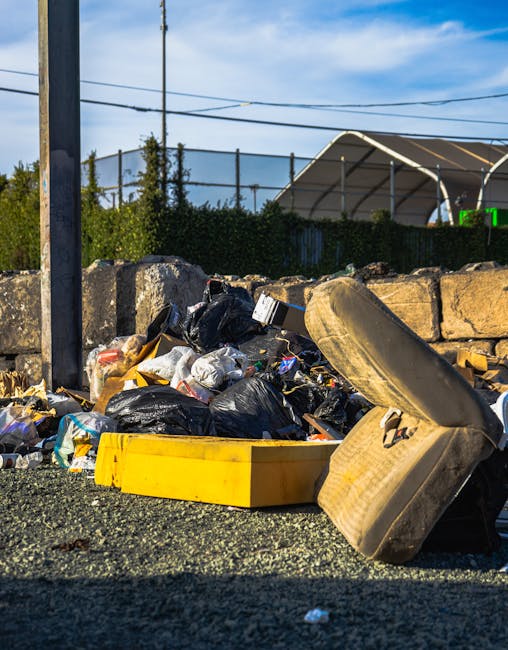
Kings Langley station WD4 rubbish removal services: a practical local guide for homes, flats, and businesses
If you live or work near Kings Langley station and you've got a pile of rubbish staring back at you, you already know the feeling: it's never just "a few bits." It's the broken chair by the bin, the old carpet rolled in the corner, the bag of mixed junk that somehow multiplies overnight. Kings Langley station WD4 rubbish removal services are there to make that mess disappear without turning your day into a logistics project.
This guide explains how local rubbish removal works, who it suits, what to expect, and how to choose the right service for the job. Whether you're clearing a flat, emptying a garage, getting rid of builders' waste, or dealing with office clutter, the aim is simple: help you get it sorted properly, quickly, and with as little stress as possible.
To keep things useful, we'll also cover common mistakes, compliance points, and a few real-world scenarios that come up around Kings Langley and the WD4 area. Nothing fluffy. Just the stuff you actually need to know.
- Why Kings Langley station WD4 rubbish removal services matters
- How the service works
- Key benefits and practical advantages
- Who this is for and when it makes sense
- Step-by-step guidance
- Expert tips for better results
- Common mistakes to avoid
- Tools, resources and recommendations
- Law, compliance, standards and best practice
- Options, methods, and comparison table
- Case study or real-world example
- Practical checklist
- Conclusion
- Frequently asked questions
Why Kings Langley station WD4 rubbish removal services Matters
Rubbish removal matters because waste has a habit of becoming a bigger problem the longer it sits. A single sofa in a hallway can block access. A few builder's bags can become a trip hazard. Garden waste can start smelling damp and earthy, especially after a wet week, and mixed household junk can quickly make a property feel neglected.
Around Kings Langley station, convenience matters too. The area has a mix of homes, flats, small businesses, commuters, landlords, and tradespeople. That means rubbish often needs to be collected around tight schedules, parking constraints, and limited access. A proper service is not just about loading items into a van. It's about handling awkward access, sorting different waste types, and making sure the waste is removed responsibly.
It also matters because the wrong approach can create avoidable problems. Fly-tipping, improper disposal, and careless handling can lead to frustration or worse. A reputable local provider should be able to help you avoid that, and do so without turning the job into a drama. Let's face it, most people just want the space back.
If your project is broader than a simple one-off collection, it may also help to look at related services such as general waste removal, a full house clearance, or targeted help like garage clearance when the clutter has taken on a life of its own.
How Kings Langley station WD4 rubbish removal services Works
Most rubbish removal services follow a fairly straightforward process, though the details can vary depending on the site, the volume of waste, and whether the items are bulky, heavy, or mixed. In practice, the process is usually easier than arranging a skip, especially if you don't want to deal with permits or loading it yourself.
Typically, you start by describing what needs to go. A good company will ask about the type of waste, access to the property, and whether there are any special items such as mattresses, electricals, office furniture, or builders' rubble. Photos can help, and in many cases they save time because everyone knows what they're dealing with before anyone arrives.
On arrival, the team will assess the load, confirm the price or scope, and then remove the rubbish. If you're near the station or on a street where parking is tight, the crew may need to plan the vehicle position carefully. That's normal. It's the kind of detail that separates a smooth job from one that feels rushed and awkward.
After collection, the waste should be taken for sorting and disposal through appropriate channels. Reuse and recycling are often considered where possible, especially for items such as furniture, metal, wood, cardboard, and some electrical goods. For a domestic clear-out with mixed items, that practical sorting step is often what makes the service feel worth it.
For more specific needs, related pages such as flat clearance, furniture clearance, or builders' waste clearance can be a better fit than a general collection. Different mess, different approach. Simple as that.
Key Benefits and Practical Advantages
The biggest advantage is obvious: you get your space back. But the real value goes further than that. A well-run rubbish removal service can reduce stress, save time, improve safety, and make a property easier to use or sell.
Here are the benefits people tend to notice most:
- Less physical effort: no need to carry awkward or heavy items down stairs, through narrow halls, or across the driveway.
- Faster turnaround: useful if you're moving out, preparing a rental, or dealing with a deadline before contractors arrive.
- Better access: piles of rubbish in entrances, lofts, and garages can be cleared in one visit instead of many trips.
- Cleaner presentation: useful for landlords, sellers, and businesses that need the property to look orderly.
- More sensible disposal: items can be separated and handled with an eye on reuse and recycling where appropriate.
A smaller but real benefit is peace of mind. If you've ever tried to clear out a room on your own on a rainy evening while the bins are already full, you'll know the feeling. It's not the most enjoyable task in the world. A professional service makes it feel manageable.
There's also flexibility. Maybe you only need one bulky item removed. Maybe you need a whole flat stripped back to the basics. Maybe the job has a bit of everything. Services that combine rubbish removal with furniture disposal or home clearance can often deal with mixed loads more efficiently.
Who This Is For and When It Makes Sense
To be fair, rubbish removal is not just for big clear-outs. It's useful in far more everyday situations than people expect. Around Kings Langley station WD4, the most common users tend to fall into a few groups.
Homeowners often need help after redecorating, replacing furniture, or finally tackling the loft. A growing pile of "we'll deal with it later" items has a way of becoming a very real problem.
Tenants and landlords may need a quick turnaround between tenancies. A flat left with leftover furniture, bags, or miscellaneous junk can delay cleaning, photography, and viewings. In those cases, a page like flat clearance can be especially relevant.
Tradespeople and property renovators usually need builders' waste removed after strip-out work, kitchen changes, or small refurbishment jobs. Bricks, offcuts, plasterboard, and packaging all take up more room than you think. That's where builders' waste clearance becomes the sensible choice.
Businesses may need office clearances, redundant equipment removed, or general waste handled as part of a move or reorganisation. Old desks, filing cabinets, and broken chairs can make even a tidy office feel chaotic. For that, office clearance or business waste removal are worth considering.
Garden and garage owners are in a class of their own. One corner becomes a dumping ground, then the whole area follows. If you know, you know. In those cases, garden clearance and garage clearance are often the quickest route back to usable space.
Step-by-Step Guidance
If you want the smoothest experience, a little preparation goes a long way. Here's a practical way to handle a rubbish removal job without overcomplicating it.
- Walk through the space. Make a rough list of what needs to go. Separate the obvious items from anything you're unsure about.
- Take a few clear photos. This helps the provider judge volume, access, and likely vehicle size.
- Identify anything special. Electrical items, paint tins, fridges, mattresses, heavy rubble, and business materials may affect how the waste is handled.
- Check access and parking. Near a station or busier street, parking can be the bit that slows everything down. It's worth thinking about early.
- Ask for a clear quote or estimate. Make sure you understand what is included, especially if the load might turn out larger than expected.
- Separate what you want to keep. Sounds obvious, but in the middle of a clear-out it's easy to misplace paperwork, chargers, or small valuables.
- Be on hand for a quick sign-off. This is useful if the crew has questions about mixed waste or access.
- Review the cleared area afterwards. A quick check can catch anything you forgot and confirm the space is ready for the next step.
If the job includes bulky household contents, consider whether a more comprehensive service would suit you better. A house clearance or home clearance is often easier than organising several small collections. One visit. Less faff.
Expert Tips for Better Results
A few small decisions can make a rubbish removal job cleaner, quicker, and cheaper overall. None of these are revolutionary, but they do make a difference.
Tip 1: group similar items together. If all the furniture is in one room and the bagged waste is in another, the team can usually work faster. Mixed piles are fine, but neat staging helps.
Tip 2: mention awkward items early. Sofas with tight corners, heavy filing cabinets, broken wardrobes, and plasterboard can all change how the job is approached. Better to mention it upfront than surprise anyone on the day.
Tip 3: don't leave the booking too late. A lot of people wait until the space is under pressure. Sometimes that's unavoidable, but if you already know the job is coming, book ahead. It reduces stress. Really, it does.
Tip 4: think about reuse before disposal. Some furniture and usable items may be suitable for removal with a view to reuse or separate handling. If you are replacing old items, you might also find furniture clearance more appropriate than a standard mixed-waste collection.
Tip 5: plan the end state. Do you need the room empty, cleaned, ready for decorating, or simply clear enough to move through safely? The answer affects how detailed the service needs to be.
Tip 6: be realistic about volume. It's easy to underestimate the amount of stuff in a loft or garage. A few boxes look harmless until they're stacked together. Then, well, it's a van full.
Common Mistakes to Avoid
Most issues with rubbish removal are avoidable. They usually come down to planning, assumptions, or trying to squeeze too much into a vague request.
Here are the mistakes that come up most often:
- Underestimating how much waste there is. A "small amount" can become several cubic metres very quickly.
- Mixing hazardous or restricted items without checking first. Some materials need special handling. Don't assume everything can go together.
- Leaving access issues unmentioned. Narrow stairs, no lift, awkward parking, or long carries can affect timing and cost.
- Forgetting to separate personal items. Keep passports, documents, keys, and anything sentimental out of the removal zone.
- Choosing a service based on price alone. Cheap can be fine. But if the quote is too vague, you may end up paying in delays or confusion.
- Waiting until rubbish blocks the space completely. This is a classic one. Suddenly you can't get to the item you actually need to keep. Annoying, that.
Another common issue is failing to match the service to the job. A single old sofa is not the same as clearing a whole loft. Likewise, office waste is not the same as garden cuttings. Choosing the right page or service type usually saves time from the start.
Tools, Resources and Recommendations
You don't need a toolbox full of specialist kit for most rubbish removal jobs, but a few simple tools and habits help.
- Bin bags and sacks: useful for loose household waste and smaller mixed items.
- Labels or marker pens: handy for marking what is to be kept, donated, or removed.
- Gloves: especially for garages, gardens, and lofts where dust and sharp edges are common.
- Tape or string: useful for securing drawers, cupboard doors, or loose furniture parts.
- Phone photos: a quick way to document the job and help with quoting.
For larger or more specialised loads, the most useful resource is often the right service page. If you're dealing with workshop or building debris, look at builders' waste clearance. If the problem is business-related, business waste removal can be a better fit. If the issue is mainly old household items, furniture disposal is often the more direct route.
If you want to learn more about the company behind the service, the about us page is a good place to understand the approach and values before booking. And if you're already ready to move, the contact us page is the quickest next step.
Law, Compliance, Standards, or Best Practice
Waste handling in the UK should always be done with care. While the exact legal details depend on the waste type and who is producing it, there are some common-sense standards that reputable services follow. They should handle waste responsibly, avoid fly-tipping, and take appropriate steps for items that need special treatment.
As a customer, it's sensible to ask a few straightforward questions. Who is taking the waste away? Where is it being taken? How is mixed waste sorted? If the waste includes business items or heavier construction material, does the provider understand the practical requirements for handling it safely? These are normal questions, not awkward ones.
For business waste in particular, it's wise to be clear about what is included and whether any records or documentation are needed for your own files. The same goes for landlords and managing agents who need a clean paper trail. Nothing dramatic, just good practice.
Furniture, electrical items, and bulky household goods can also need extra care. A professional team should be able to explain what can be collected and how it will be managed. If you're not sure about an item, ask before loading it into the pile. Much better than dealing with a last-minute issue on collection day.
Finally, if you are comparing providers, look for clear communication, sensible pricing, and a willingness to explain the process. That usually tells you more than a polished sales pitch ever will.
Options, Methods, or Comparison Table
There are a few ways to deal with rubbish around Kings Langley station WD4. The best one depends on the amount, type, and urgency of the waste. Here's a simple comparison.
| Method | Best for | Advantages | Limitations |
|---|---|---|---|
| Professional rubbish removal | Mixed household, bulky items, quick clear-outs | Fast, convenient, minimal effort from you | May cost more than self-loading |
| Skip hire | Larger projects with ongoing waste generation | Good for prolonged work, flexible loading | Space needed, permit may be required, you load it yourself |
| Self-transport to a tip | Small amounts and people with time and transport | Can be cheaper for tiny loads | Time-consuming, lifting required, multiple trips possible |
| Specialist clearance service | Flats, offices, garages, lofts, furniture, builders' waste | More tailored to the waste type | Requires choosing the right specialist service |
For many local customers, the sweet spot is a specialist removal service that handles the lifting, loading, and disposal in one visit. That is especially true when access is tight or the waste is mixed. If your situation is more specific, services like loft clearance or garage clearance may give you a better result than a generic collection.
Case Study or Real-World Example
Imagine a small ground-floor flat near Kings Langley station after a tenant move-out. There's an old wardrobe in the bedroom, a broken chair in the hallway, a couple of bags of mixed rubbish, and a dusty pile of unwanted items in the corner of the living room. Nothing extreme. Just enough to make the place feel cramped and unfinished.
The landlord needs the flat ready for cleaning and photos by the next day. The issue is access: the road is busy, parking is limited, and the items are awkward to carry through a narrow shared entrance. In that kind of situation, a focused flat clearance or waste removal visit is a lot more practical than trying to move everything out in stages.
The service team would typically confirm the load, remove the items, and leave the space ready for the cleaner. If the wardrobe is reusable, it may be handled separately from the general waste. If the load includes extra bags or a mattress, that can be addressed on the spot provided it's discussed in advance. Nice and simple, once it's organised properly.
A similar example comes up with homeowners in the WD4 area who are preparing for a renovation. One room becomes the staging area, then another. Before long, there's a trail of old shelving, boxes, offcuts, and random "we might need this later" items. A good clearance service stops the clutter from spreading. That's often the real value, truth be told.
Practical Checklist
Use this quick checklist before booking Kings Langley station WD4 rubbish removal services.
- Have I identified exactly what needs to be removed?
- Do I know whether the waste is household, furniture, garden, builders', or business-related?
- Have I taken photos of the load and access points?
- Are there stairs, narrow hallways, or parking restrictions to mention?
- Have I separated items I want to keep?
- Are there any electricals, heavy materials, or special items to flag early?
- Do I need a one-off collection or a fuller service such as house, home, or office clearance?
- Do I understand the quote and what it includes?
- Am I clear on the time window and how the team will arrive?
- Have I chosen the most relevant service page or contact route?
One small but useful habit: keep a "do not remove" corner. Even a single chair or table with a note on it can stop accidental mistakes. It sounds almost too basic, but it works.
Conclusion
Kings Langley station WD4 rubbish removal services are about more than getting rid of unwanted stuff. They help you reclaim space, reduce stress, and deal with waste in a practical, responsible way. Whether you're dealing with a flat, house, garage, loft, office, garden, or a builders' mess after a job, choosing the right service makes the whole process easier.
The best results usually come from a simple formula: be clear about the waste, mention access issues early, choose the right service type, and work with a provider that communicates plainly. Nothing fancy. Just solid local service and a bit of common sense.
If you're unsure which service fits your situation, start with the most relevant page, compare your options, and ask the questions that matter. A good provider should make the next step feel straightforward, not confusing.
Get a free quote today and see how much you can save.
And once the clutter's gone, that empty space has a way of feeling brighter than you expected. A bit calmer too. Funny how that works.
Frequently Asked Questions
What do Kings Langley station WD4 rubbish removal services usually include?
They usually include collection, lifting, loading, and responsible disposal of unwanted items. Depending on the job, that may cover household waste, furniture, garden debris, office items, or builders' waste.
Is rubbish removal better than hiring a skip?
It depends on the job. Rubbish removal is often better for mixed waste, awkward access, or quick clear-outs because the team does the lifting for you. A skip can suit longer projects where you want to load waste over time.
Can you remove bulky furniture from a flat near Kings Langley station?
Yes, that is a common request. Sofas, wardrobes, beds, and tables are often removed as part of a flat clearance or furniture clearance service. Access details matter, though, so it helps to mention stairs or tight entrances early.
What if I only have a small amount of rubbish?
Small jobs are often fine. A single bulky item, a few bags, or a compact mixed load can usually be handled without any drama. It's still worth checking whether the service has a minimum charge or call-out structure.
Do I need to sort the waste before collection?
Not always, but it helps to separate items where practical. Keep personal belongings out of the waste, and flag any special materials such as electricals or heavy rubble. Clearer loads are usually easier and quicker to handle.
How do I know which clearance service I need?
Think about the main type of waste. House and home clearances suit mixed domestic items, garage and loft clearances suit storage areas, office clearance suits business premises, and builders' waste clearance suits renovation debris.
Can rubbish removal help before a property sale or tenancy change?
Yes. It's one of the most common reasons people book. Clearing clutter makes a property easier to clean, photograph, and present well. It also reduces the risk of delays when move-out dates are tight.
Is furniture disposal handled separately from general rubbish?
Often, yes. Furniture can sometimes be suitable for reuse or needs different handling from ordinary bagged waste. A dedicated furniture disposal or furniture clearance service can make the process more efficient.
What should I ask before booking a rubbish removal service?
Ask what is included, whether the team handles lifting, how they deal with mixed waste, what access details they need, and whether there are items they cannot take. Those few questions prevent most surprises.
Are office clearances suitable for small businesses near the station?
Yes. Small offices, studios, and workspaces often need help removing desks, chairs, paperwork, shelving, and old equipment. A business waste removal or office clearance service is usually the right fit.
What happens to the rubbish after it is collected?
It should be taken away for sorting and disposal through suitable waste channels. Recyclable materials may be separated where possible, and some items may be handled differently depending on type and condition.
How far in advance should I book?
If the job is straightforward, sometimes short notice is possible. But if you have a deadline, need access planning, or want a larger clearance, booking ahead is the safer option. It gives everyone more room to get it right.
Where can I find more information about the company and policies?
You can review the about us page for background, and the terms and conditions and privacy policy pages for standard website and service information.
How do I get in touch for a quote?
The quickest next step is to use the contact us page with a brief description of what needs removing, plus any photos if possible. That usually makes quoting much smoother.